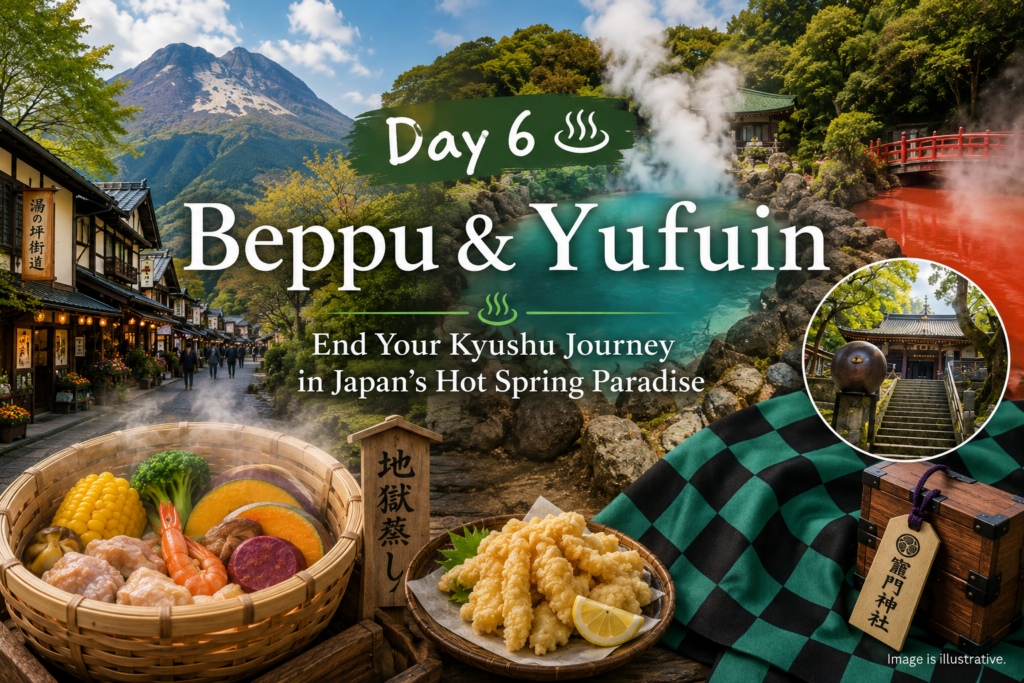
Want to experience the full Kyushu manga creator journey? Start here: From Tokyo to Kyushu: The Ultimate Manga Creator Journey Through Japan
Fukuoka is one of the best food destinations in Japan.
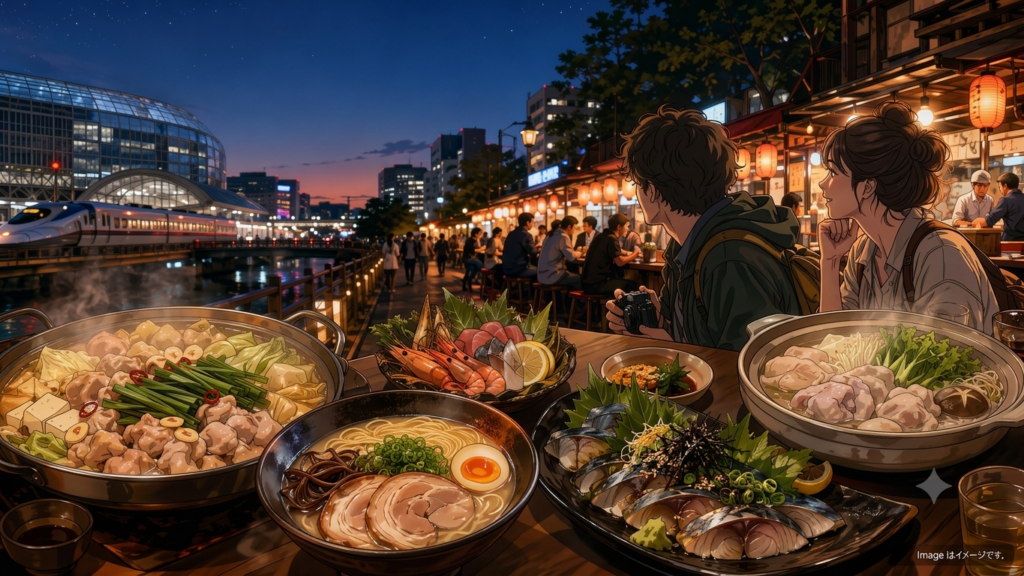
The city is famous for rich hot pot dishes, creamy pork bone ramen, fresh seafood and lively outdoor food stalls. Many of its most memorable meals are affordable, casual and deeply connected to the everyday culture of Hakata.
Fukuoka is also an important city for manga and anime fans.
NARUTO creator Masashi Kishimoto studied at Kyushu Sangyo University in Fukuoka, and the city has a special connection with the real ramen restaurant associated with Ichiraku Ramen.
Anime fans may also recognize mizutaki from the first episode of Delicious in Dungeon, where a fantasy hot pot becomes one of the first memorable meals of the series.
In Fukuoka, food is not simply something to eat between sightseeing stops. It can become part of the manga and anime journey itself.
This guide introduces the essential dishes, how they taste, how to eat them and where to find them.
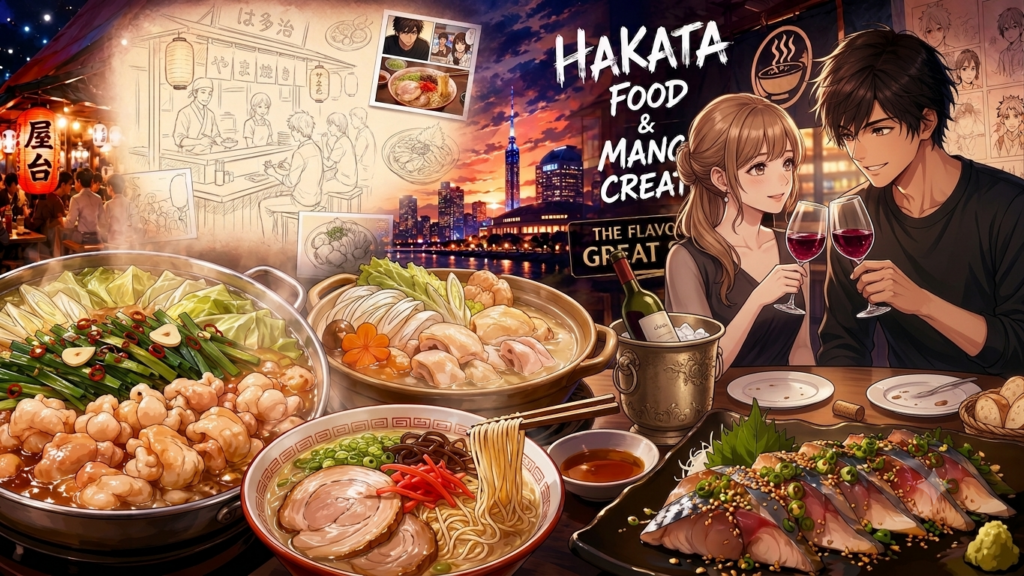
Why Fukuoka Is One of Japan’s Greatest Food Cities
Fukuoka has access to fresh seafood from the waters around northern Kyushu.
Meat, vegetables and regional ingredients also arrive from across the island, giving local restaurants access to an exceptional range of produce.
However, the real strength of Fukuoka is its own distinctive food culture.
The three essential Hakata dishes are motsunabe, mizutaki and tonkotsu ramen.
Goma saba, mentaiko, charcoal grilled chicken and yatai food stalls add even more variety.
Fukuoka food is often rich in flavor but casual in presentation. Some of the city’s best meals are served in lively neighborhood restaurants, relaxed izakayas and small food stalls rather than formal dining rooms.
Must Bite: Hakata Motsunabe
Motsunabe is one of the most important dishes to understand before visiting Fukuoka.
Motsu refers to edible beef or pork offal. Hakata motsunabe usually contains fresh beef small intestine cooked with cabbage, garlic chives and garlic in a soy sauce or miso based broth.
Some international visitors may hesitate when they first hear what the main ingredient is.
Fresh and carefully prepared motsu, however, has almost none of the strong odor that many people expect.
The outside has a pleasantly springy texture, while the inside is soft, rich and almost creamy. The natural fat has a delicate sweetness that slowly melts into the soup.
As the pot cooks, the cabbage becomes sweeter and the garlic chives release their aroma.
These flavors combine with the meat, garlic and Japanese broth to create a meal that is deep, warming and intensely satisfying.
Motsunabe is not simply an unusual dish eaten for the experience. It is genuinely loved by Japanese diners and remains one of the foods most strongly associated with Hakata.
Many international visitors approach motsunabe with hesitation, only to become captivated by its rich broth, gentle sweetness and unexpectedly satisfying texture.
After trying it once, many want to eat it again.
It is the kind of dish that takes travelers beyond the familiar world of sushi and ramen and draws them deeper into Japan’s regional food culture.
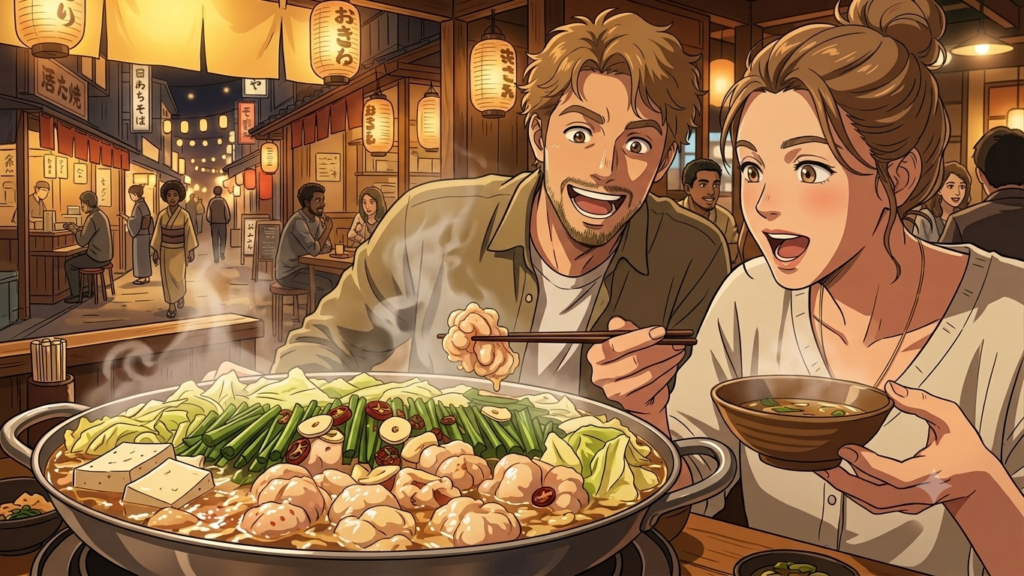
How to Finish Motsunabe
Do not stop after eating the meat and vegetables.
The traditional final step is to add champon noodles to the remaining soup.
By this point, the broth contains the concentrated flavor of the motsu, cabbage, garlic, chives and seasonings.
The noodles absorb everything left in the pot.
For many diners, this final bowl is one of the best parts of the entire meal.
Some restaurants also offer rice instead of noodles. The rice absorbs the broth and creates a rich porridge similar to Japanese risotto.
Recommended Motsunabe Restaurants
Hakata Motsunabe Yamanaka
Visit the official English website for Hakata Motsunabe Yamanaka
Yamanaka is especially famous for miso flavored motsunabe.
The restaurant was established in 1984 and is closely associated with the development of miso motsunabe as one of Hakata’s major styles.
It uses fresh small intestine from domestic cattle and serves it in a thick broth with sweetness, richness and depth.
The Hakata branch has an elegant interior that feels more refined than the casual image some travelers may associate with hot pot.
This is an excellent choice for a special first experience.
Hakata Motsunabe Ooyama
Visit the official English website for Hakata Motsunabe Ooyama
Ooyama is known for its rich miso broth and carefully selected beef intestine.
Several branches are located around Hakata Station, making it one of the easiest choices for travelers staying in the area.
It is particularly convenient when you want authentic motsunabe without traveling far from your hotel.
Motsunabe Ichifuji Hakata
Visit the official English website for Motsunabe Ichifuji Hakata
Ichifuji is located close to Hakata Station and serves large pieces of soft and flavorful beef motsu.
The menu also includes other Kyushu dishes, making it a practical choice for visitors who want to taste several regional specialties during one meal.
Must Bite: Hakata Mizutaki
Mizutaki is Hakata’s traditional chicken hot pot.
Chicken bones and meat are slowly cooked to create a broth with a clean appearance and remarkably deep flavor.
The soup is lighter than motsunabe, but it is not weak.
A properly prepared mizutaki broth contains concentrated chicken flavor and a rich layer of umami.
The meal often begins with the broth itself.
Some restaurants serve a small cup of soup with salt before adding the vegetables and other ingredients. This allows you to appreciate the foundation of the dish before the flavors in the pot begin to change.
Chicken, cabbage and other vegetables are then cooked in the broth and eaten with ponzu, a refreshing citrus and soy sauce.
Mizutaki is an excellent choice for travelers who want a meal that feels both nourishing and luxurious.
It is also a delicious way to eat a generous amount of vegetables.
At the end of the meal, rice is added to the remaining broth to make zosui.
The rice absorbs the flavor of the chicken and vegetables, creating a warm and comforting conclusion.
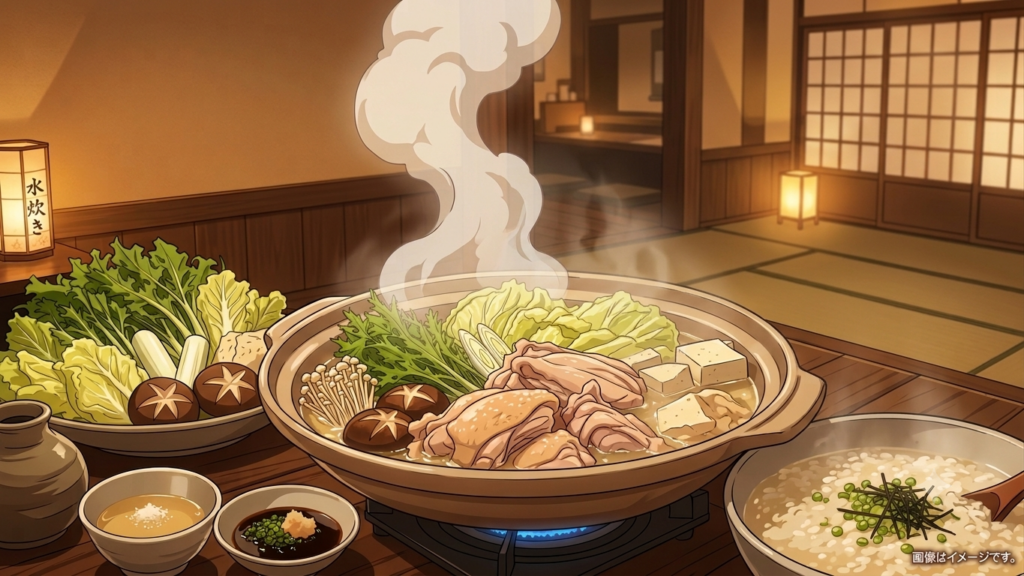
The Delicious in Dungeon Connection
Anime fans may recognize mizutaki from the first episode of Delicious in Dungeon.
The episode features a fantasy hot pot made with a huge scorpion, walking mushrooms and other ingredients collected inside the dungeon.
Traditional Hakata mizutaki does not contain monsters, and it is not the exact origin of the fictional recipe.
However, the essential experience is similar.
Different ingredients are slowly cooked together in a shared pot. Their flavors gradually enter the broth, and the meal becomes richer as everyone continues eating.
Eating mizutaki in Hakata gives Delicious in Dungeon fans the opportunity to experience an authentic Japanese hot pot with the same feelings of warmth, discovery and companionship.
It may be the closest way to experience the spirit of that first dungeon meal without hunting monsters yourself.
Recommended Mizutaki Restaurants
Hakata Hanamidori
View Hakata Hanamidori at KITTE Hakata
Hakata Hanamidori uses its own Kyushu raised chicken and offers a complete traditional mizutaki meal.
The KITTE Hakata branch is directly connected to Hakata Station, making it particularly convenient for first time visitors.
This is one of the easiest places to experience mizutaki without complicated transportation.
Shin Miura Hakata
Visit the official website for Shin Miura
Shin Miura is a historic restaurant associated with Hakata mizutaki culture.
The restaurant places great importance on its carefully prepared chicken broth.
Choose Shin Miura when you want a more traditional restaurant atmosphere and a meal centered on the depth of the soup.
Mizutaki Suigetsu
Visit the official website for Mizutaki Suigetsu
Suigetsu is closely associated with the early history of Hakata mizutaki.
It is suitable for travelers who want to experience the dish in a historic specialist restaurant rather than inside a modern station complex.
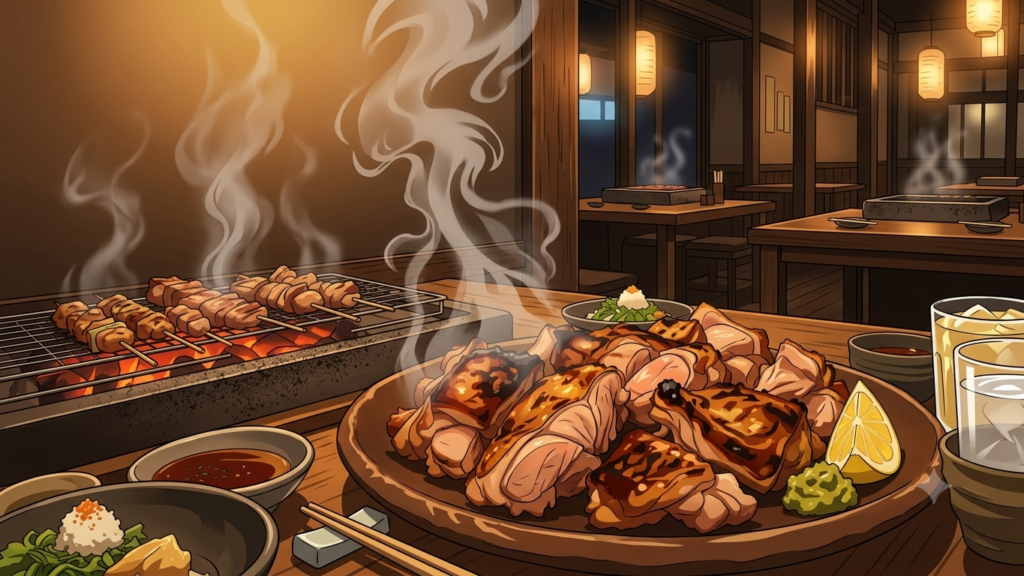
Another Chicken Experience: Jidori Yaki
Mizutaki is not the only chicken dish worth seeking out in Fukuoka.
Jidori yaki is charcoal grilled chicken prepared using flavorful Japanese chicken.
At first glance, it may resemble yakitori, but the experience is quite different.
Yakitori usually consists of small pieces of chicken placed on bamboo skewers.
Jidori yaki may use larger pieces of chicken grilled directly over charcoal.
The outside develops a smoky roasted aroma, while the inside remains juicy and full of concentrated chicken flavor.
The meat may also have a firmer and more satisfying texture than ordinary commercial chicken.
It can surprise even Japanese diners who are already familiar with conventional yakitori.
Visit the official Zidoriya website
A jidori restaurant also provides the opportunity to experience Japanese izakaya culture.
Order grilled chicken, several small dishes and a local drink.
The relaxed atmosphere is just as important as the food.
This is an excellent choice for travelers who do not want a full hot pot meal.
Hakata Tonkotsu Ramen
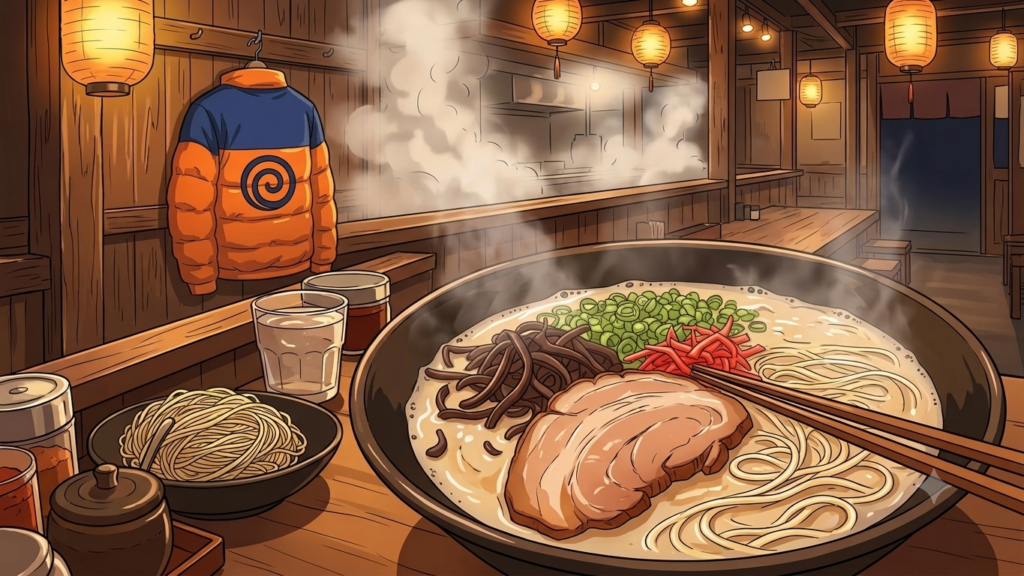
No Fukuoka food guide is complete without Hakata tonkotsu ramen.
The soup is made by boiling pork bones until the broth becomes rich, savory and creamy.
Hakata ramen is usually served with very thin and straight noodles.
Diners can often choose how firmly the noodles should be cooked.
Many local customers order firm noodles because the thin noodles soften quickly in the hot broth.
Common toppings include sliced pork, green onions and wood ear mushrooms.
Famous brands such as Ichiran and Ippudo now operate restaurants throughout Japan and overseas.
You can eat their ramen in Tokyo or Osaka, but enjoying tonkotsu ramen in Fukuoka means tasting it in its home region.
A bowl is also often considerably less expensive than the same style of ramen overseas.
What Is Kaedama
Kaedama is an additional serving of noodles.
When you have almost finished your first portion, order kaedama and the restaurant will place fresh noodles directly into the remaining soup.
Do not drink all the broth before ordering.
Many diners add extra green onions, sesame, pickled ginger or spicy seasoning when the second portion arrives.
This allows the flavor of the ramen to change during the meal.
Tonkotsu Ramen and NARUTO
For manga fans, Fukuoka ramen has significance beyond taste.
NARUTO creator Masashi Kishimoto studied at Kyushu Sangyo University in Fukuoka.
During his student years, he is widely reported to have visited an Ichiraku Ramen branch located near the university.
That branch has since closed, but the connection between the restaurant and the fictional Ichiraku Ramen remains widely known among fans.
In NARUTO, Ichiraku Ramen is much more than a convenient place to eat.
It is where Naruto celebrates victories, recovers after difficult missions and shares quiet moments with the teachers and friends who gradually become his family.
Visitors can still eat at Ichiraku Ramen Najima Main Store in Fukuoka.
For manga fans, the meal connects one of the most famous fictional ramen restaurants with the real food culture that surrounds it.
Read our complete guide: Naruto Ramen in Real Life: Visit the Fukuoka Shop That Inspired Ichiraku
Easy Tonkotsu Ramen Choices
Ichiran Hakata Branch
Visit the official English page for Ichiran Hakata
Ichiran specializes in tonkotsu ramen and is known for its individual dining booths.
The ordering system allows customers to adjust the richness of the broth, amount of garlic, spice level and firmness of the noodles.
It is an easy choice for international travelers who may feel nervous about ordering inside a busy Japanese ramen shop.
Ippudo
Visit the official page for Ippudo Daimyo Main Store
Ippudo began in Fukuoka and later expanded throughout Japan and overseas.
The Daimyo Main Store is a meaningful choice for travelers who want to visit the famous brand in its home city.
There is also a convenient branch inside the Hakata Station complex.
Goma Saba and Fukuoka Seafood
Fukuoka has excellent access to fish from the waters around northern Kyushu.
Restaurants throughout the city serve sashimi, sushi, grilled fish, seafood rice bowls and traditional Japanese set meals.
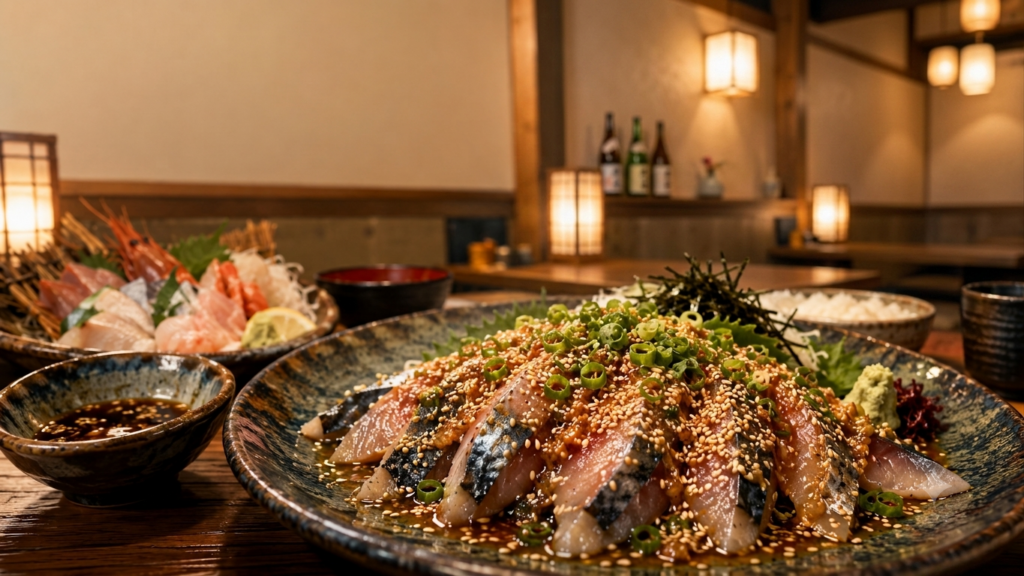
The local seafood dish you should not miss is goma saba.
Goma saba is made with fresh raw mackerel served with sesame, soy sauce, green onions and other seasonings.
Mackerel has a rich flavor and soft texture.
The sesame sauce adds nuttiness and depth without hiding the taste of the fish.
This is not simply another kind of sashimi. It is one of Fukuoka’s essential local foods.
Raw mackerel requires excellent freshness, so goma saba may not be available every day.
The supply depends on the day’s catch and the restaurant.
When you find it on the menu, order it.
Recommended Seafood Restaurant Near Hakata Station
Hakata Amano
Hakata Amano is located inside KITTE Hakata, beside Hakata Station.
It serves seafood and traditional Japanese dishes in an accessible setting.
This is a useful restaurant for travelers who want authentic Japanese food without making a reservation at an expensive restaurant or traveling far from their hotel.
It can be used for breakfast, lunch or a casual dinner.
Mentaiko
Mentaiko is seasoned pollock roe and another essential Fukuoka specialty.
It has a salty and savory flavor with varying levels of chili heat.
The simplest way to eat it is with steamed white rice.
The combination of warm, mild rice and concentrated mentaiko is one of the most satisfying experiences in Japanese food.
You may also find mentaiko inside rice balls, omelets, pasta, bread and tamagoyaki.
Some restaurants serve an entire piece of mentaiko as part of a Japanese breakfast or set meal.
Even travelers who do not usually eat fish roe may find its smooth texture and intense umami surprisingly approachable.
Finish the Night at a Yatai
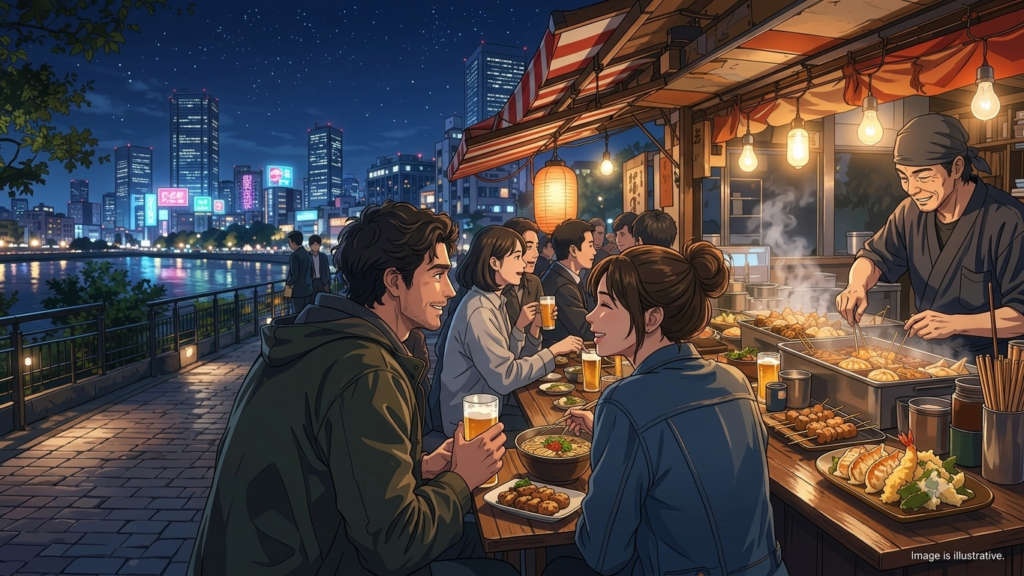
Fukuoka is famous for its yatai, small outdoor food stalls that begin operating in the evening.
The main yatai areas are Tenjin, Nakasu and Nagahama.
Inside a yatai, customers sit closely around a narrow counter while the owner prepares ramen, gyoza, oden, tempura, grilled food and other small dishes.
The close seating is part of the experience.
Locals and travelers may begin talking naturally because everyone shares the same small space.
You do not need to order a complete meal.
A drink and one or two small dishes are enough to enjoy the atmosphere, especially after eating motsunabe or mizutaki elsewhere.
Yatai have limited seating, so individuals, couples and small groups are easier to accommodate.
Some stalls may remain closed during heavy rain, strong wind or other bad weather.
View the official Fukuoka yatai guide
What Should You Eat With Only One Night
For the most classic Hakata experience, choose motsunabe as your main dinner.
Afterward, walk through Tenjin or Nakasu and visit a yatai for one drink and a small dish.
For a lighter evening, begin with goma saba, sashimi and grilled fish.
Finish the night with a bowl of tonkotsu ramen.
Chicken lovers should choose mizutaki or jidori yaki.
Delicious in Dungeon fans may find the mizutaki experience particularly memorable.
NARUTO fans should make tonkotsu ramen part of their itinerary.
Trying to eat every specialty in one evening is not recommended.
Fukuoka food is best enjoyed slowly, with enough time to appreciate the atmosphere of each restaurant.
The Deeper Side of Japanese Food
Many first time visitors arrive in Japan thinking mainly about sushi, tempura and ramen.
Fukuoka opens the door to something deeper.
Motsunabe introduces the pleasure of carefully prepared ingredients that may initially seem unfamiliar.
Mizutaki demonstrates how much flavor can be created from chicken, water and time.
Goma saba reveals the importance of freshness.
Yatai show the warmth and intimacy of Japanese street dining.
The connections with NARUTO and Delicious in Dungeon add another layer, but the food does not need fiction to become memorable.
Once you have tasted Hakata properly, Fukuoka stops feeling like a gateway to somewhere else.
It becomes one of the main reasons to visit Kyushu.