The Hidden Town Behind a Global Phenomenon
Want to experience the full Kyushu manga creator journey? Start here: From Tokyo to Kyushu: The Ultimate Manga Creator Journey Through Japan
Few manga have changed popular culture as profoundly as Attack on Titan.
Millions of fans know the towering Walls, the Scout Regiment, and the tragic story of Eren Yeager. Yet surprisingly few realize that the creator of the series, Hajime Isayama, grew up in a quiet rural town that most Japanese people have never even visited.
That town is Hita, located in Oita Prefecture on Japan’s Kyushu island.
Far from being just another anime destination, Hita has embraced its connection to Attack on Titan, transforming itself into one of Japan’s most remarkable pilgrimage sites for manga fans. Rather than building a theme park, the city invites visitors to experience the landscapes, history, and atmosphere that shaped one of the world’s greatest manga creators.
Official information about the city’s collaboration with the series can be found on the Attack on Titan in HITA tourism website.

A Town Where Fiction Meets Reality
For many visitors, the first surprise is how peaceful Hita feels.
Surrounded by mountains and rivers, it is the complete opposite of Tokyo’s endless skyscrapers. It is easy to understand how growing up in such dramatic natural surroundings could leave a lasting impression on a young artist.
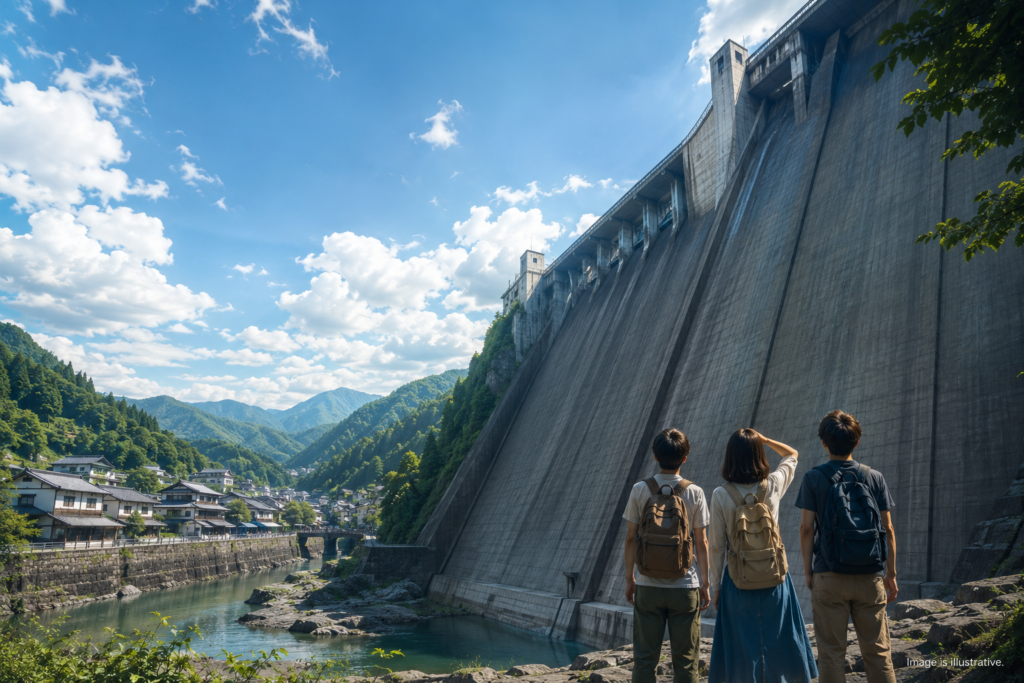
The most iconic destination is Oyama Dam.
Standing 94 meters tall, the massive concrete wall immediately reminds fans of Wall Maria. At the base of the dam stand bronze statues of young Eren, Mikasa, and Armin gazing upward toward the enormous structure, recreating one of the most memorable images from the manga.
It is one of those rare anime locations where reality seems to perfectly capture the emotional atmosphere of the fictional world. Standing beside the three children while looking up at the towering dam gives visitors a surprisingly powerful sense of scale and wonder.
More Than Statues
Hita’s connection to Attack on Titan extends throughout the city.
Outside JR Hita Station, visitors are welcomed by a bronze statue of Captain Levi wearing the Survey Corps uniform, making it one of the most photographed landmarks in town.
Fans should also visit the Attack on Titan in HITA Museum and its ANNEX exhibition space. Located at the Mizube no Sato Oyama roadside station and the Sapporo Beer Kyushu Hita Factory, the museums feature original artwork, immersive exhibits, and displays introducing Hajime Isayama’s childhood and creative journey.
Rather than simply displaying merchandise, these museums tell the story of how an ordinary boy from rural Japan created one of the most influential manga series of the twenty-first century.
Discover the Japan Beyond the Manga
Even without its connection to Attack on Titan, Hita would be worth visiting.
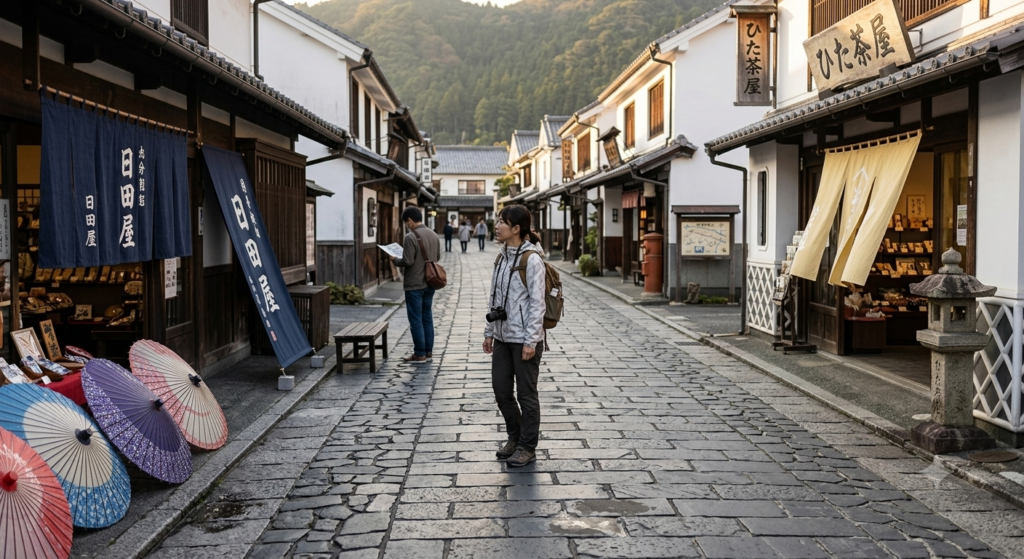
The city is home to Mameda Town, a beautifully preserved district often called the Little Kyoto of Kyushu.
Once an important government-controlled town during the Edo period, Mameda still retains its white-walled merchant houses, traditional storehouses, and narrow streets that invite visitors to slow down and explore on foot.
Historic soy sauce breweries, sake breweries, traditional Hita geta sandal workshops, and charming cafés create an atmosphere that feels untouched by modern urban life.
For international travelers, it offers a chance to experience a side of Japan that rarely appears in guidebooks focused only on Tokyo, Kyoto, and Osaka.
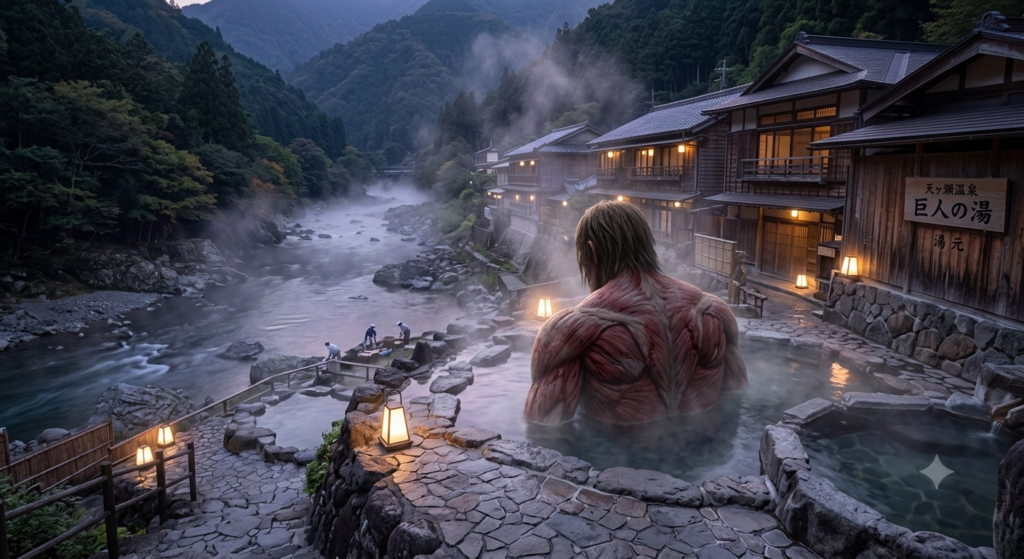
Relax in One of Kyushu’s Historic Hot Spring Towns
Hita is also known as one of Japan’s famous water towns.
Fed by the clear waters of the Chikugo River system, the city has enjoyed a reputation for excellent hot springs for centuries.
Hita Onsen has welcomed travelers for more than 400 years, while Amagase Onsen, one of Oita’s three great hot spring resorts, offers riverside ryokan and open-air baths surrounded by beautiful mountain scenery.
After spending the day visiting Attack on Titan locations, relaxing in a traditional Japanese hot spring is an experience few fans forget.
What to Eat in Hita
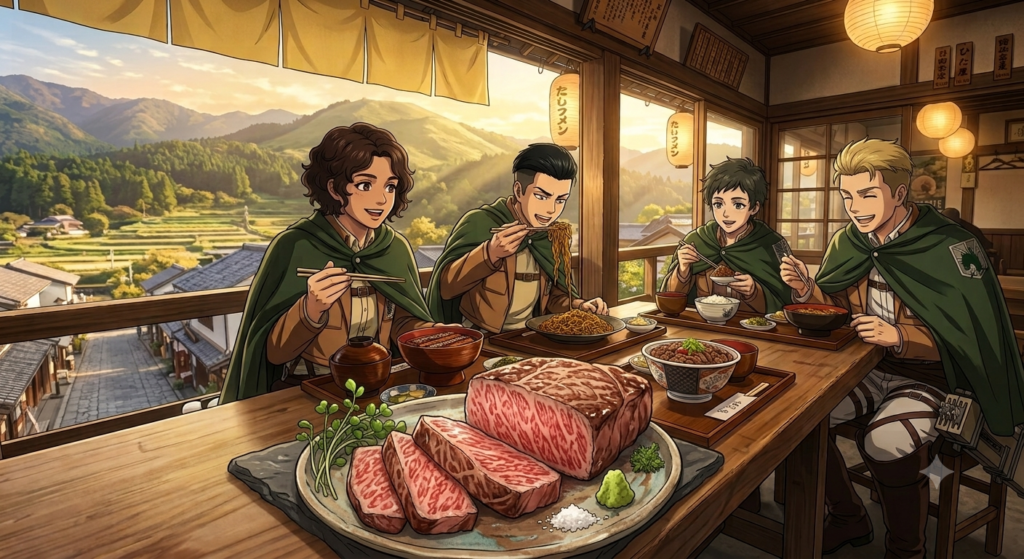
One of the greatest pleasures of visiting Hita is discovering its local cuisine.
The city’s signature dish is Hita Yakisoba.
Unlike ordinary stir-fried noodles, Hita Yakisoba is cooked until the noodles become golden and crispy on the outside while remaining chewy inside. Combined with crunchy bean sprouts and a rich savory sauce, it has become one of Kyushu’s best-loved comfort foods and is easy for first-time visitors to enjoy.
Another local specialty is grilled freshwater eel served over rice. Restaurants such as Hita Mabushi Senya are well known for welcoming international visitors with English menus and guides explaining the traditional way to enjoy the dish.
Those looking for a premium dining experience can also try Oita’s famous Bungo Beef. Restaurants overlooking the river serve beautifully prepared Japanese wagyu alongside spectacular scenery, offering a memorable conclusion to a day of sightseeing.
How to Get to Hita
Although Hita feels wonderfully secluded, reaching the city is surprisingly straightforward.
From Tokyo, direct flights to Fukuoka Airport take approximately two hours. From there, Hita can be reached in around 90 minutes by express bus or train.
Travelers arriving through Hakata Station in Fukuoka can also reach Hita in roughly 90 minutes, making it an easy day trip or overnight destination.
If you are already planning to visit the real-life inspiration for Naruto’s Ichiraku Ramen in Fukuoka, adding Hita to your itinerary is one of the best ways to discover another side of Kyushu’s rich manga culture.
Final Thoughts
Many anime pilgrimage destinations recreate scenes from a story.
Hita offers something much deeper.
It allows visitors to experience the landscape that helped shape the imagination of Hajime Isayama himself.
Standing beneath the towering Oyama Dam, walking the quiet streets of Mameda, soaking in centuries-old hot springs, and sharing local food with the people who call this town home creates a connection that no museum or theme park can replicate.
For Attack on Titan fans, Hita is more than a destination.
It is a chance to step into the place where one of manga’s greatest stories truly began.