Introduction
Jujutsu Kaisen. Chainsaw Man. Attack on Titan: The Final Season.
Many of the anime that have captivated audiences around the world over the past decade share one name in their credits.
MAPPA.
Today, MAPPA is widely recognized as one of Japan’s most influential anime studios. From award winning films to global television hits, the studio has built a reputation for ambitious storytelling, striking animation, and unforgettable characters.
Yet MAPPA did not begin as a large company with worldwide ambitions.
Its story started with a legendary producer in his seventies who simply refused to let one extraordinary film disappear.

A Studio Born to Complete One Film
MAPPA was founded in 2011 by Masao Maruyama after he left Madhouse, one of Japan’s most respected animation studios.
For decades, Maruyama had helped produce some of Japan’s most celebrated anime while at Madhouse, a legendary studio known for classics such as YAWARA!, Hunter × Hunter, Monster, Perfect Blue, and many other influential works.
After leaving the company at the age of 70, Maruyama established MAPPA with one clear purpose.
He wanted to bring director Sunao Katabuchi’s In This Corner of the World to the screen.
At the time, the film faced serious funding difficulties, and there was no guarantee it would ever be completed.
Rather than abandoning the project, Maruyama created an entirely new animation studio to support its production.
The studio’s name, MAPPA, stands for Maruyama Animation Produce Project Association.
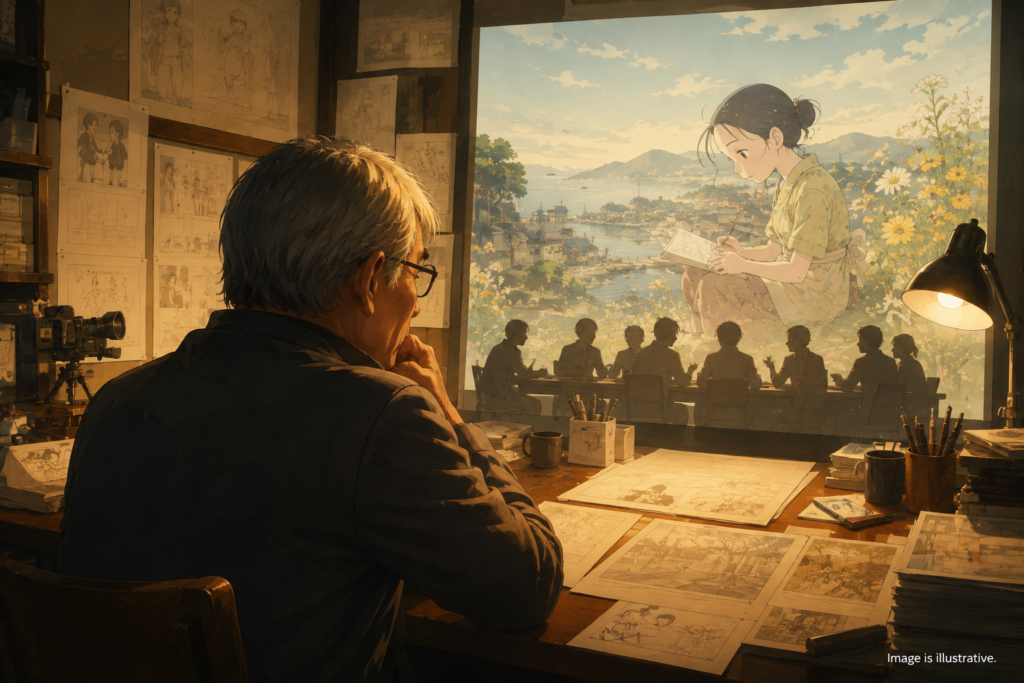
In This Corner of the World Became MAPPA’s Foundation
Released in 2016, In This Corner of the World remains one of the most important works in MAPPA’s history.
Set in Hiroshima during World War II, the film follows the ordinary life of a young woman as she navigates the hardships of war.
Instead of focusing on battles, it carefully recreates everyday life through cooking, family relationships, neighborhood communities, and small moments of happiness.
That quiet approach made the tragedy of war feel deeply personal.
The film became a remarkable success, remaining in Japanese theaters for an unprecedented 1,133 consecutive days. It attracted more than 2.1 million viewers and earned over ¥2.7 billion at the domestic box office.
Today, it is still regarded as one of Japan’s finest animated films and remains deeply beloved by audiences.
MAPPA’s Most Famous Anime
One reason for MAPPA’s worldwide success is the remarkable variety of its productions. Rather than focusing on a single genre, the studio has consistently delivered acclaimed works across action, drama, sports, fantasy, and historical storytelling.
Jujutsu Kaisen
One of the biggest anime franchises of the 2020s, Jujutsu Kaisen introduced millions of viewers to MAPPA’s dynamic action sequences and cinematic animation. Its movie, Jujutsu Kaisen 0, became one of the highest grossing Japanese animated films of all time.
Chainsaw Man
Adapting Tatsuki Fujimoto’s unconventional manga was an enormous challenge. MAPPA’s bold visual direction and film inspired cinematography helped make the series one of the studio’s most internationally discussed productions.
Attack on Titan: The Final Season
When MAPPA took over production of the final chapters of Attack on Titan, expectations were incredibly high. The studio successfully brought one of the most influential anime series in history to its dramatic conclusion.
Vinland Saga Season 2
Rather than relying solely on spectacular action, MAPPA showcased its ability to tell emotional and character driven stories. The second season received widespread praise for its mature themes and thoughtful storytelling.
Banana Fish
This adaptation of Akimi Yoshida’s acclaimed manga earned praise for its faithful storytelling, strong character relationships, and emotional intensity, becoming one of MAPPA’s most respected dramas.
A New Era Under Manabu Otsuka
In 2016, founding member Manabu Otsuka became MAPPA’s second president.
Under his leadership, the studio expanded rapidly, producing an increasing number of television series and feature films while growing into one of Japan’s leading animation companies.
Its productions reached audiences across the globe, and Jujutsu Kaisen 0 alone was released in more than 70 countries and regions, earning approximately ¥23.7 billion worldwide.
Within just a decade, MAPPA had transformed from a small independent studio into one of the industry’s most influential names.
Why Japanese Fans Respect MAPPA
Outside Japan, MAPPA is often associated with modern global hits such as Jujutsu Kaisen and Chainsaw Man.
Within Japan, however, the studio is respected for another reason.
It has repeatedly introduced classic manga to new generations through high quality adaptations.
Works such as Dororo demonstrate MAPPA’s willingness to revisit beloved stories while respecting the spirit of the originals.
For many Japanese fans who grew up reading these manga, MAPPA represents both innovation and continuity.
It is not simply creating the next generation of anime. It is also preserving the legacy of Japanese manga culture.

The Philosophy Behind MAPPA
From its earliest days, MAPPA has embraced a simple philosophy.
Create stories that the staff genuinely believe in.
Support directors with ambitious creative visions.
Pursue quality even when the production is difficult.
Many of these values originated with founder Masao Maruyama and continue to influence the studio today.
Rather than limiting itself to one genre, MAPPA has produced action series, historical dramas, sports anime, psychological thrillers, slice of life stories, and original productions.
That creative flexibility has become one of its defining strengths.
Why MAPPA Became a Global Success
MAPPA was never founded to dominate the global anime industry.
It began with a much simpler goal.
To complete one film that its founder believed deserved to exist.
More than a decade later, the studio has become one of the most recognizable names in Japanese animation.
Its success is not simply the result of blockbuster franchises.
It is the product of a creative philosophy that values passionate filmmakers, ambitious storytelling, and the belief that exceptional animation is always worth pursuing.