Introduction
When anime fans talk about the greatest studios in Japan, names like MAPPA, Ufotable, and Studio Ghibli often come up.
Yet among longtime fans, one studio is spoken of with a different kind of respect.
Kyoto Animation.
Known affectionately in Japan as KyoAni, the studio became so famous for its extraordinary craftsmanship that fans coined a phrase for its work: KyoAni Quality.
From The Melancholy of Haruhi Suzumiya and K On! to Violet Evergarden and Sound! Euphonium, Kyoto Animation has repeatedly changed what television anime could achieve.
More than a successful studio, it helped redefine how anime is made, how creators are trained, and how stories are brought to life.
Here’s why Kyoto Animation remains one of Japan’s most respected animation studios.
A Studio Built on the Foundations of Japanese Anime
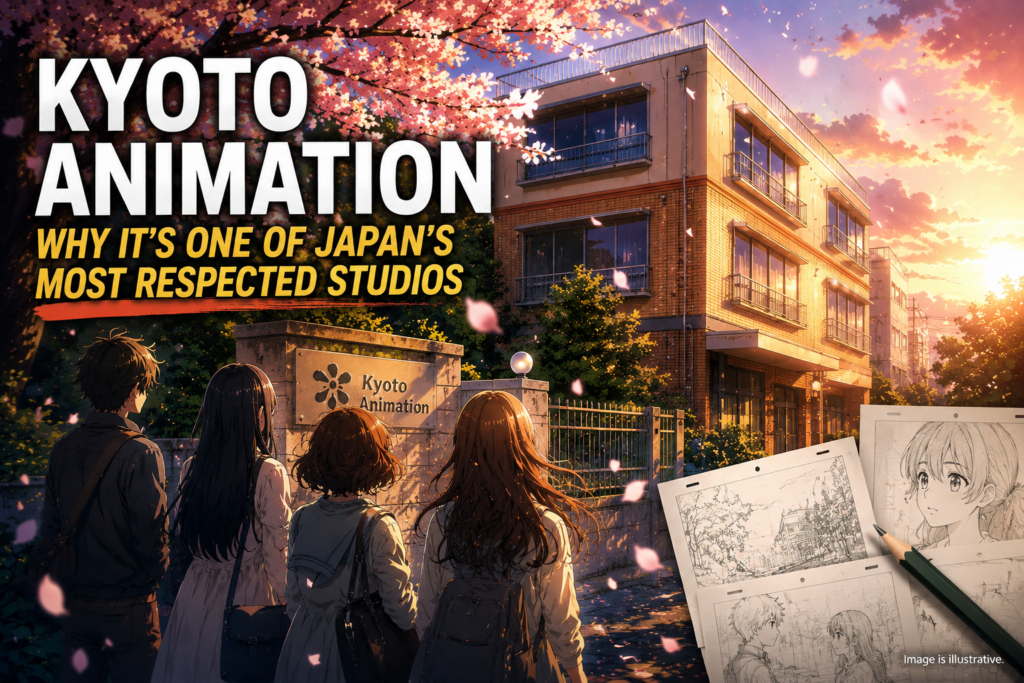
Kyoto Animation was founded in Kyoto in 1981.
Although the company grew into one of Japan’s most influential studios, its roots reach back to the earliest days of modern anime.
Co founder Yoko Hatta learned animation production at the former Mushi Production under the influence of Osamu Tezuka, often called the God of Manga.
That connection gave Kyoto Animation a direct link to the generation that helped establish Japan’s television animation industry.
Over the following decades, the studio developed its own identity while building upon that foundation.
Why Fans Talk About KyoAni Quality
Many studios produce beautiful animation.
Kyoto Animation became famous because it chose a different approach.
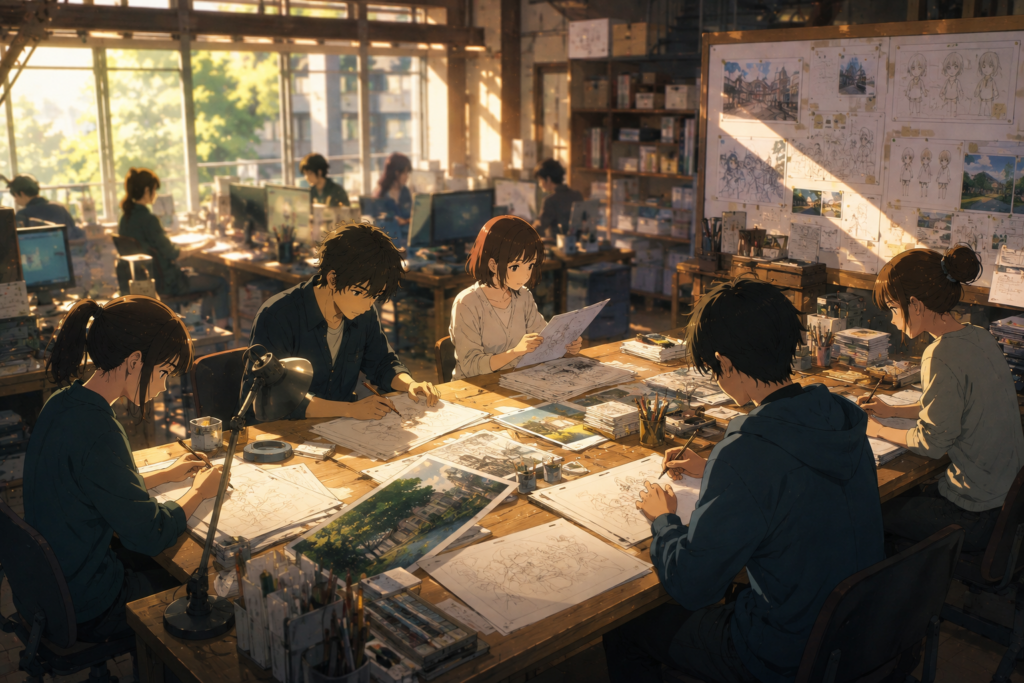
Instead of outsourcing much of the production process, it built an environment where nearly every major department worked under one roof.
Animation.
Background art.
Color design.
Photography.
Direction.
By allowing these teams to collaborate closely from beginning to end, the studio achieved an extraordinary level of consistency that few others could match.
Its philosophy reflects this approach.
Great works begin by developing great people.
Inside the company, one phrase has become symbolic of its culture.
Everyone comes together to make great animation.
That collaborative spirit is one of the biggest reasons why KyoAni Quality became recognized around the world.
The Studio That Changed Television Anime
Kyoto Animation had already earned respect within the industry, but everything changed with AIR in 2005.
Its breathtaking lighting, emotional cinematography, expressive character acting, and polished digital compositing immediately stood out from most television anime of the time.
At a time when weekly television anime rarely looked this cinematic, AIR raised expectations for what television animation could achieve.
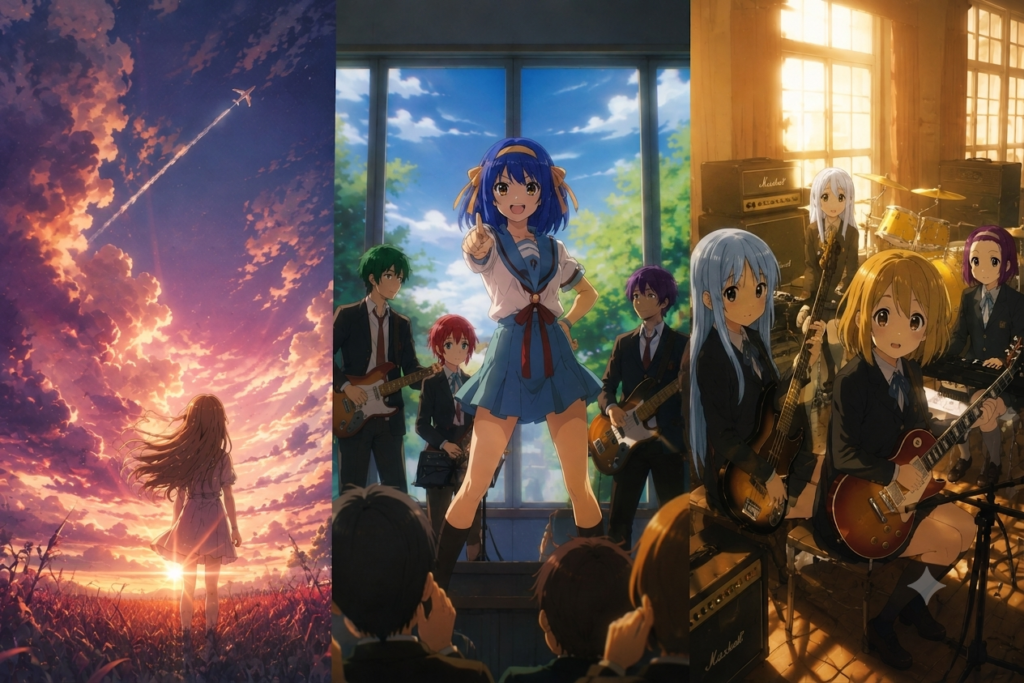
The following year, The Melancholy of Haruhi Suzumiya became a cultural phenomenon.
Its unconventional storytelling and iconic ending dance spread rapidly across the growing internet, introducing countless overseas fans to Kyoto Animation for the first time.
Then came K On! in 2009.
The series became far more than a successful anime.
Character songs topped Japanese music charts.
The guitars used by the characters quickly sold out across Japan.
The theatrical film later earned approximately ¥1.9 billion at the Japanese box office.
It demonstrated that anime could influence music, consumer culture, and the wider entertainment industry.
Respecting the Original While Elevating It
One characteristic has defined Kyoto Animation for decades.
Respect for the original work.
Whether adapting visual novels such as AIR, Kanon, and CLANNAD, or novels like Hyouka, the studio became known for faithfully preserving the emotional core of the source material.
Rather than dramatically rewriting stories, Kyoto Animation strengthened them through subtle acting, expressive animation, thoughtful pacing, and meticulous visual storytelling.
At the same time, the studio was never afraid to expand upon an original work when doing so genuinely enhanced the experience.
K On! introduced memorable original scenes that became beloved by fans, while later productions explored even bolder creative interpretations.
Creating Stories of Its Own
Even after producing numerous hit series, Kyoto Animation realized that animation studios often received only a limited share of the long term success of the works they adapted.
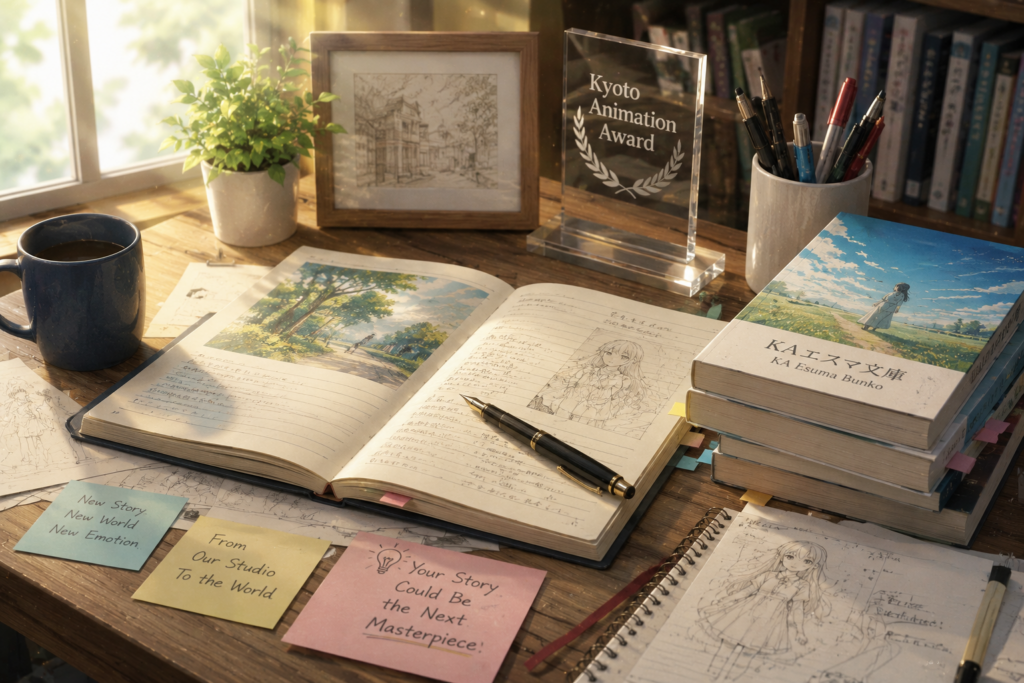
To gain greater creative independence, the company established the Kyoto Animation Award and later launched its own publishing imprint, KA Esuma Bunko.
This allowed Kyoto Animation to discover new writers, publish original novels, and eventually adapt many of those stories itself.
Series such as Love, Chunibyo & Other Delusions, Free!, and Violet Evergarden all grew from this long term creative strategy.
Instead of simply adapting other companies’ stories, Kyoto Animation created an ecosystem where original works could be developed from the very beginning.
The Tragedy That Shook the Anime World
On July 18, 2019, an arson attack destroyed Kyoto Animation’s Studio 1.
Thirty six employees lost their lives, making it one of the deadliest attacks in modern Japanese history.
The tragedy deeply affected not only Japan but anime fans around the world.
Messages of support and donations arrived from dozens of countries as people expressed gratitude for the studio’s decades of work.
Although the loss can never be replaced, Kyoto Animation has continued creating new films and television series, demonstrating remarkable resilience.
Why Kyoto Animation Is Still So Highly Respected
Many studios produce hit anime.
Very few change the industry itself.
Kyoto Animation transformed production quality.
It invested in its own artists instead of relying heavily on freelancers.
It treated animation as teamwork rather than individual genius.
It respected original creators while elevating their stories through extraordinary craftsmanship.
Most importantly, it proved that kindness, patience, and careful collaboration could produce some of the most beloved anime ever created.
Today, many studios create beautiful anime.
Kyoto Animation helped define what beautiful television animation could be.
That is why it continues to be regarded as one of Japan’s most respected animation studios.