Some manga entertain you.
Some redefine an entire genre.
Bakuman does something even rarer.
It changes the way you see every manga you’ve ever read.
Created by the legendary duo behind Death Note, writer Tsugumi Ohba and artist Takeshi Obata, Bakuman was serialized in Weekly Shonen Jump from 2008 to 2012. While it never became a global phenomenon on the scale of One Piece or Naruto, it remains one of the most respected manga ever published about the art of making manga itself.
If you love Japanese manga, there’s a good chance Bakuman will change the way you read it forever.
It’s Not About Fighting. It’s About Creating.
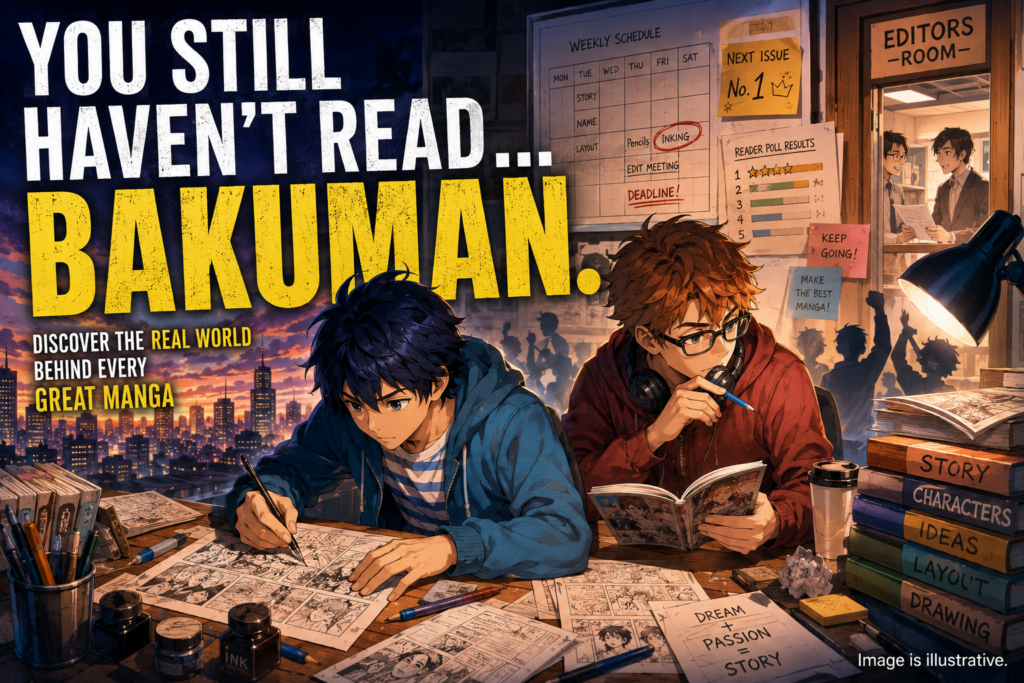
Bakuman follows two teenagers with completely different talents.
Moritaka Mashiro dreams of becoming a professional manga artist. Akito Takagi is a gifted writer with a talent for storytelling. Together, they decide to chase the impossible: becoming successful creators in Weekly Shonen Jump, Japan’s most competitive manga magazine.
There are no supernatural powers.
No giant monsters.
No martial arts tournaments.
Instead, every chapter revolves around deadlines, creative struggles, rival creators, editorial meetings, and the relentless pressure of producing a hit series.
It may sound quiet compared to a battle manga, but the tension is every bit as compelling.
The Best Way to Understand How Japanese Manga Is Made
Millions of people read manga.
Far fewer know how those stories actually reach the page.
That’s what makes Bakuman so fascinating.
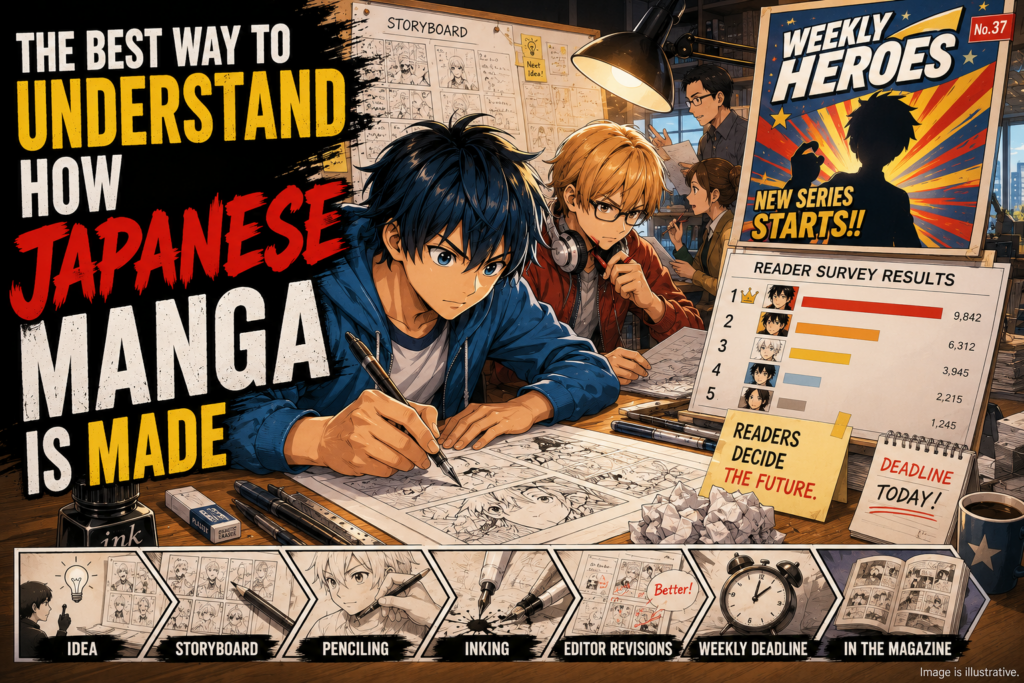
The series takes readers inside the Japanese manga industry, following every step of the creative process. From brainstorming ideas and drawing storyboards to revising chapters with editors and racing to meet impossible weekly deadlines, it reveals a side of manga that most international readers never get to see.
One of its most memorable themes is Weekly Shonen Jump’s reader survey system.
Every week, readers vote for their favorite series. Those results influence a manga’s placement in the magazine and can even determine whether a series continues or ends.
Success isn’t guaranteed by talent alone.
Every new chapter is another chance to win—or lose—the support of readers.
After finishing Bakuman, you’ll never open a Jump manga without thinking about the creators working behind every page.
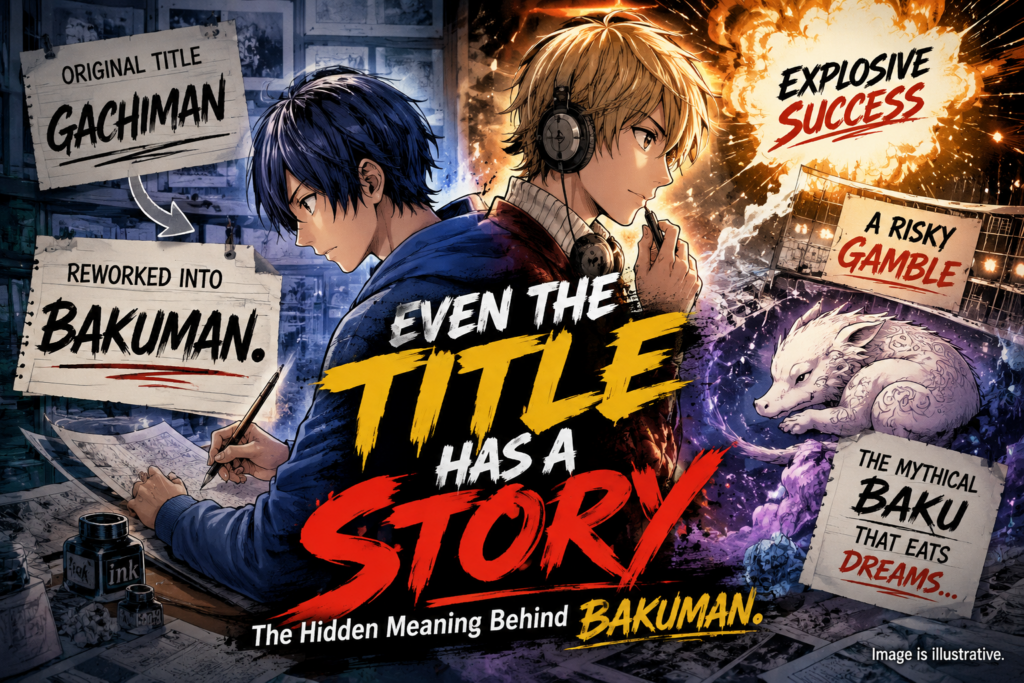
Even the Title Has a Story
Bakuman almost had a completely different name.
Artist Takeshi Obata originally proposed the working title Gachiman. Writer Tsugumi Ohba later reworked it into Bakuman because the word “Baku” could carry multiple layers of meaning.
It can suggest an explosive success.
It can evoke the gamble of competing in one of the world’s toughest creative industries.
Some readers also associate it with the mythical baku, a creature from Japanese folklore said to eat dreams—an image that fits two young creators chasing an almost impossible goal.
It’s a small detail, but one that perfectly reflects the spirit of the series.
Even the title encourages readers to look a little deeper.
There Isn’t Just One Way to Become a Great Manga Creator
Another reason Bakuman stands out is that it refuses to present success as a simple formula.
Some creators possess extraordinary natural talent.
Others succeed through discipline, preparation, and relentless hard work.
The series respects both paths.
It also introduces something that surprises many overseas readers: some of Japan’s biggest manga are created by teams, with one person writing the story while another focuses entirely on the artwork.
Understanding that creative partnership gives readers a new appreciation for countless manga beyond Bakuman itself.
Why Every Manga Fan Should Read Bakuman
Don’t expect another Death Note.
Bakuman isn’t a psychological thriller.
What it offers instead is something arguably more valuable.
Perspective.
The next time you read One Piece, Blue Box, Kagurabachi, or any other Weekly Shonen Jump series, you’ll see more than ink on a page.
You’ll think about the artists working through sleepless nights.
The editors refining every chapter.
The weekly reader surveys that can change a creator’s career overnight.
Suddenly, every chapter carries a little more weight.
Bakuman isn’t simply a story about becoming a manga artist.
It’s a story about ambition, teamwork, creativity, disappointment, perseverance, and the extraordinary effort behind one of Japan’s greatest cultural exports.
If you truly love manga, Bakuman isn’t just another classic you should eventually get around to reading.
It’s the manga that helps you understand why Japanese manga became a global phenomenon.

Further Reading
MANTANWEB – Interview with Tsugumi Ohba and Takeshi Obata discussing the title’s origin